Experiments
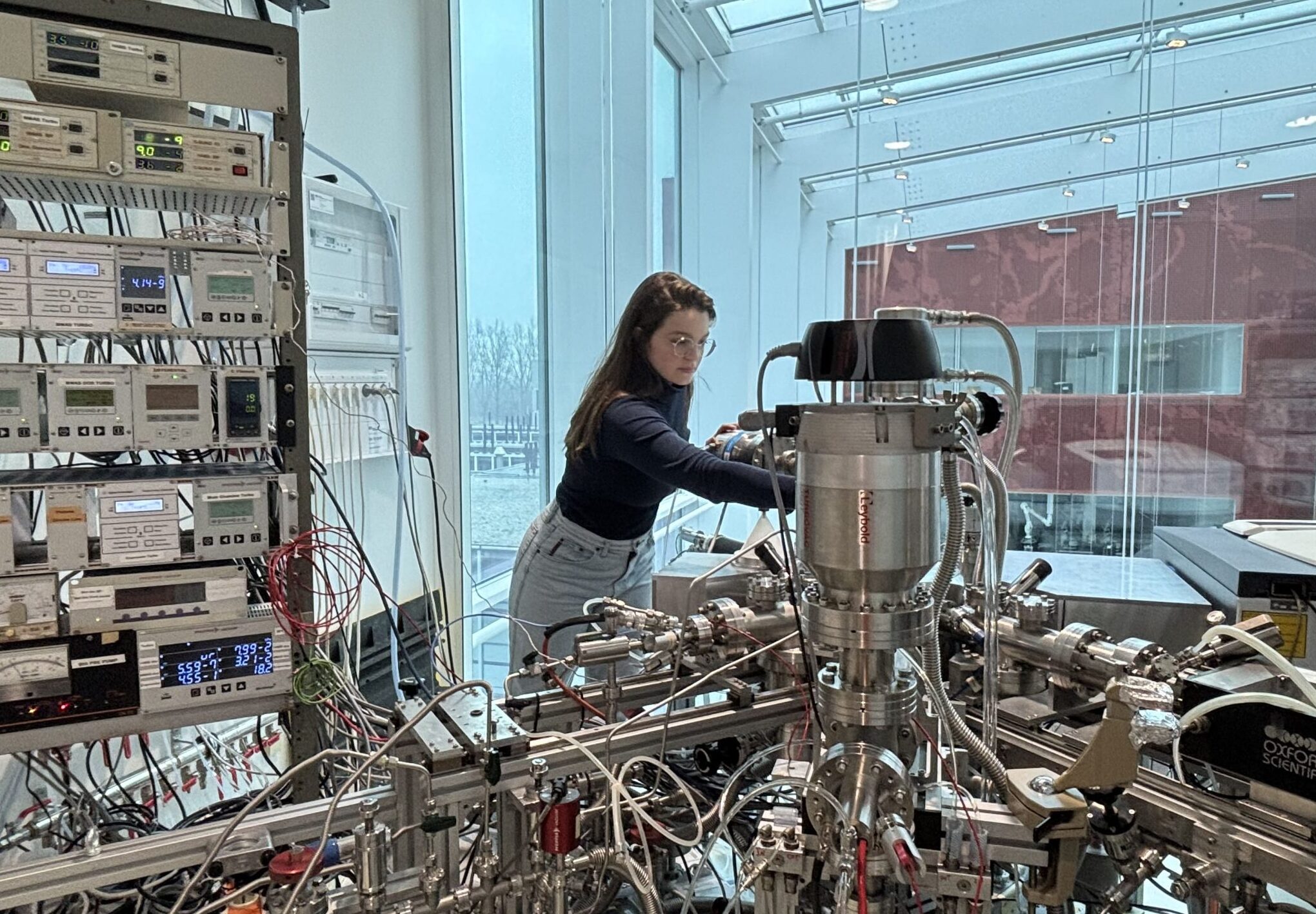
I simulate interstellar ice chemistry and microphysics in the laboratory using ultrahigh vacuum setups coupled with cryogenic techniques.
Observations
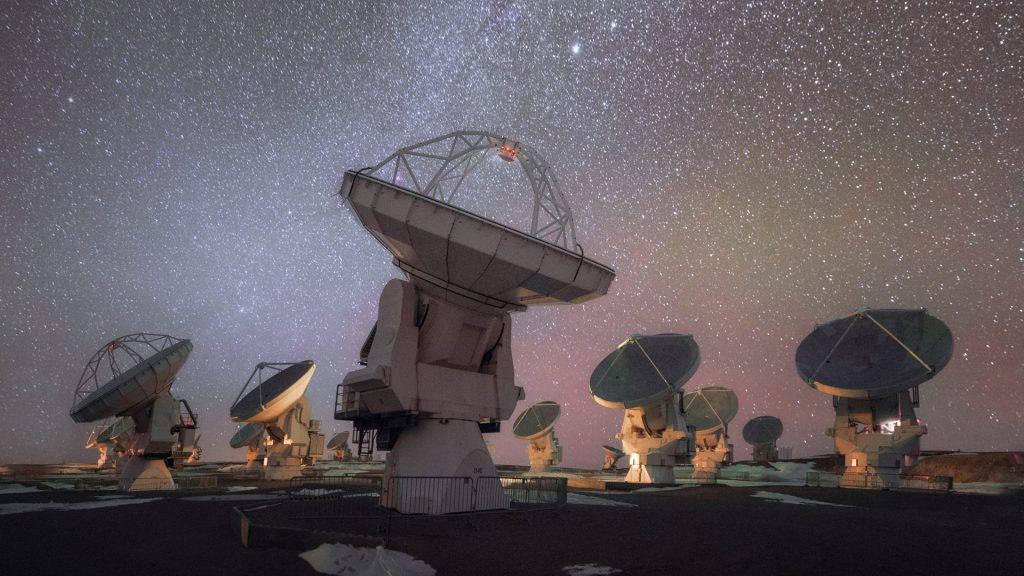
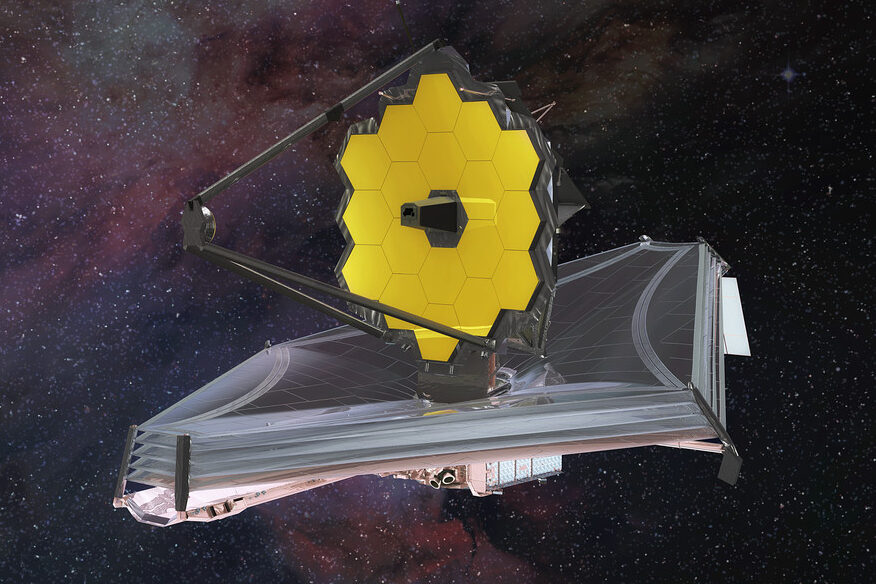
I use radio and infrared observations to empirically constrain the formation, destruction, and inheritance of molecules throughout star and planet formation.
Modeling

I use theoretical modeling to help interpret and translate ground-truth lab results into predictions that can be tested against the observational data.
For a full list of publications, see my CV.
Research Highlights
In this study, we experimentally characterize for the first time the sublimation dynamics of hydrogen sulfide (H₂S) ice and derive its desorption temperatures and snowline positions. We find that H₂S is highly efficiently entrapped in water ice (≳75%), effectively shifting its snowline close to that of H₂O, meaning H₂S is expected to remain in the solid phase throughout the entire region where comets and icy asteroids form.
SO₂ and OCS are the only two sulfur-bearing molecules detected in interstellar ices to date, making them ideal probes of sulfur chemistry across the ice-gas transition. In this work, we investigate their abundances towards 26 massive protostars and find that, despite distinct origins and evolutionary timescales, SO₂ and OCS may share a common chemical history.
Methanol (CH₃OH) is the simplest complex organic molecule and a key constituent of interstellar ices. In this study, we provide the first experimental confirmation of a newly proposed dominant pathway to forming CH₃OH on interstellar grains, using the kinetic isotope effect to disentangle contributions from competing mechanisms.